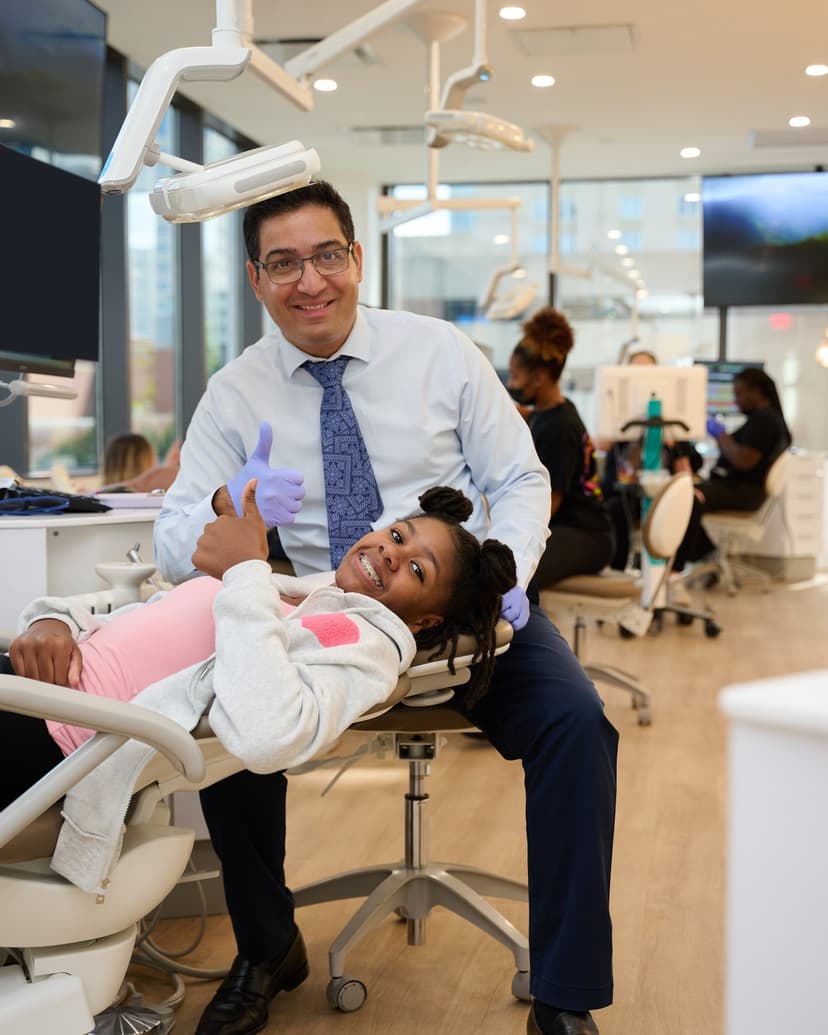
Braces
Braces for kids, teens and adults
Braces move teeth with brackets and a wire that your orthodontist adjusts over time. Today’s brackets are smaller and smoother than they used to be, and treatment is planned from digital records.
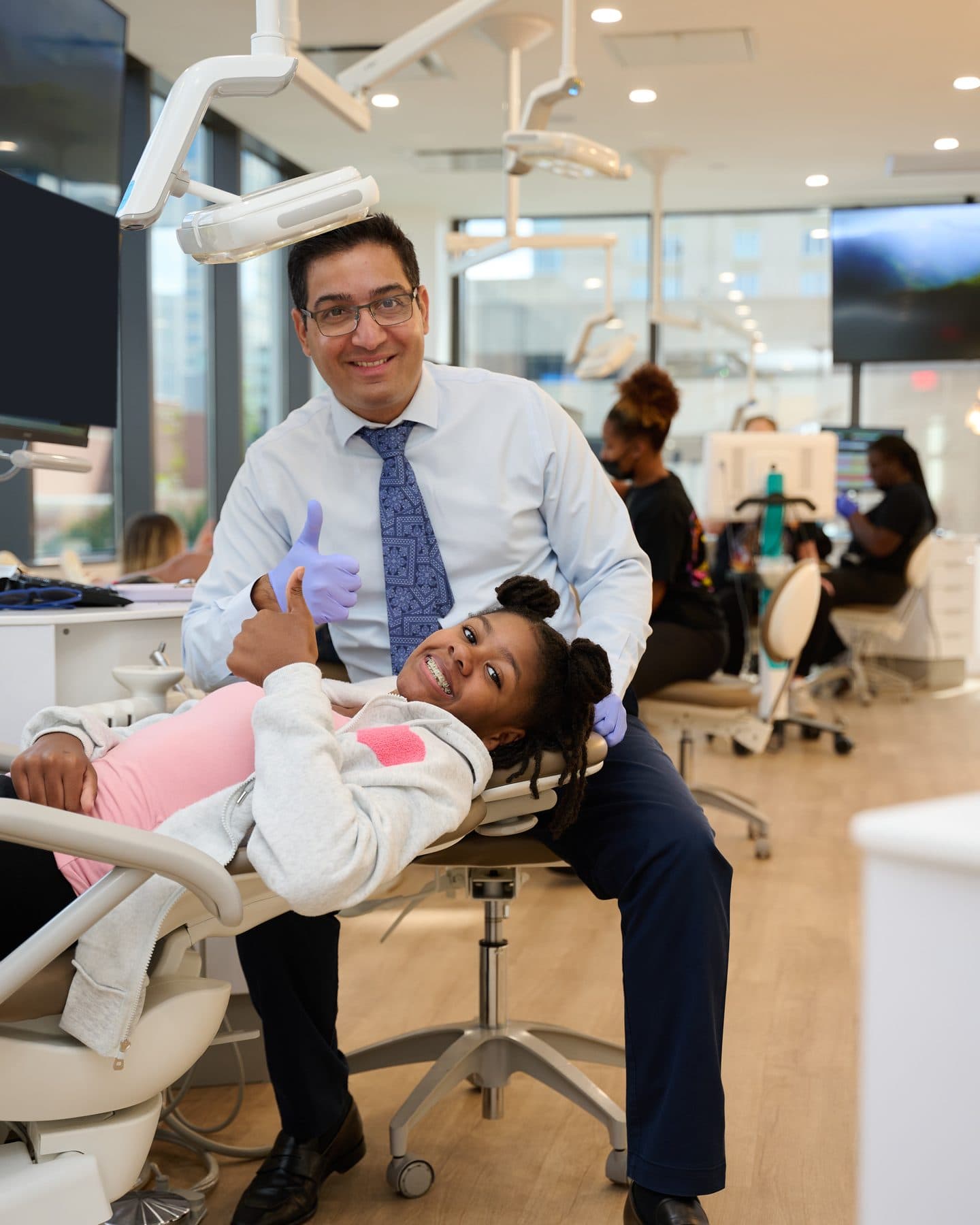
Is it right for me?
Who it suits.
- Children, teens and adults with crowding, spacing or bite concerns.
- Cases where fixed appliances give your orthodontist the most control over tooth movement.
- Anyone who would rather not have to remember to wear removable aligners.
Types of braces
Types of braces
Metal braces
Durable, low-profile stainless-steel brackets. Many kids and teens enjoy choosing colored bands.
Clear (ceramic) braces
Tooth-colored brackets that are less noticeable, popular with teens and adults.
How it works
Step by step.
- 1
Consultation and records
Your orthodontist examines your teeth and bite and takes digital photos, scans and X-rays as needed.
- 2
Your treatment plan
You learn what the plan involves, which type of braces suits you, and the full fee before you decide.
- 3
Placing your braces
Brackets are bonded to your teeth in a single visit, and the wire is placed.
- 4
Adjustment visits
Regular visits let your orthodontist adjust the wire and check progress.
- 5
Retainers
When your braces come off, retainers keep your teeth in their new positions.
Which type of braces is right for you?
Metal braces are durable and suit the widest range of bite problems. Clear (ceramic) braces work the same way but blend in with your teeth. Self-ligating brackets, in metal or clear, hold the wire with a built-in clip instead of elastic ties. Lingual braces, fixed behind the teeth, are available on request.
Your orthodontist recommends a type at your consultation based on your bite, your goals and how noticeable you want your braces to be. See our guides to the types of braces and clear braces for a side-by-side comparison.
What treatment with braces involves
Most comprehensive treatment takes about 18 to 24 months; your plan may differ, and your orthodontist gives you your own estimate at the consultation. Adjustment visits are usually every 6 to 8 weeks for braces and every 8 to 12 weeks for aligners, and you can come to any of our seven offices.
At each visit your orthodontist checks progress and adjusts or changes the wire. Teeth can feel sore for a few days afterwards. Some plans also use elastics (small rubber bands) to correct the bite, and wearing them as directed keeps treatment on track.
Looking after your braces
Brush after meals and clean between your teeth every day, using floss threaders or a water flosser around the wire. Avoid hard, sticky and chewy foods, and cut crunchy foods like apples and carrots into small pieces.
If a bracket comes loose or a wire pokes, cover it with orthodontic wax and call or text (757) 224-3004. Wear a mouthguard for contact sports.
Cost and insurance
Your full fee is given to you in writing at your free consultation, before you decide. Many dental plans include an orthodontic benefit, and we offer monthly payment plans. See braces cost for typical fee ranges, what’s included and payment examples.
Questions
Answers, in plain language.
Do braces hurt?
Teeth can feel sore for a few days after braces are placed and after adjustments. Soft foods and over-the-counter pain relief usually help.
What can’t I eat with braces?
Avoid hard, sticky and chewy foods — such as popcorn, hard candy, gum and ice — which can loosen brackets or bend wires.
How long will I wear braces?
It depends on what needs to be corrected. Your orthodontist will give you an estimate at your consultation.
Braces or Invisalign?
Both can treat many of the same concerns. Your orthodontist will explain which option fits your teeth and lifestyle.
Are clear braces weaker than metal braces?
Clear ceramic brackets work the same way as metal ones. They can be a little more brittle, so your orthodontist will tell you whether they suit your bite.
Can I play sports or an instrument with braces?
Yes. Wear a mouthguard for contact sports. Most people playing wind instruments adjust within a few weeks, and orthodontic wax can help.
What happens after my braces come off?
You get retainers to keep your teeth in their new positions. Your orthodontist explains how often to wear them.
General information, not a diagnosis. Your orthodontist will recommend treatment after an examination.
Related